Early Numeracy Toolkit

Job Aid
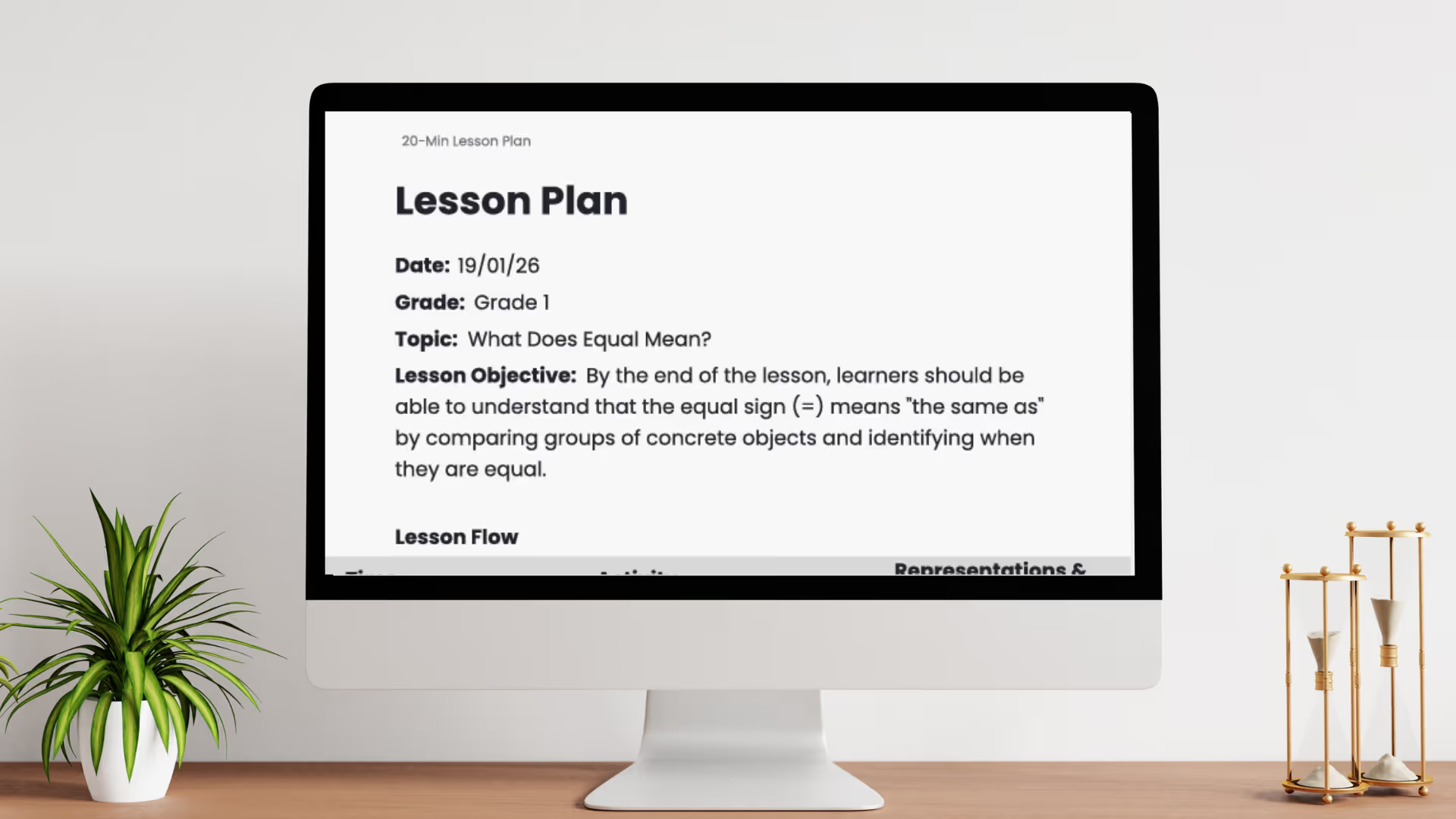
Screenshot of a teacher-focused learning material named "Understanding The Concept of Equality".
CLIENT
Inspiring Teachers
PROJECT TYPE
Job Aid
YEAR
2026
The Situation

Inspiring Teachers is committed to improving foundational numeracy by equipping educators with clear, structured lessons that help young learners build deep mathematical understanding.

One common misconception in early mathematics is how students interpret the equal sign (=). Many learners see it as a signal that “the answer comes next,” rather than understanding it as a symbol that represents a relationship between two quantities.

To address this challenge, the team designed a test task to evaluate how curriculum designers break down mathematical standards, structure lesson progressions, and translate abstract concepts into accessible learning experiences for young learners.

The Challenge
The task required designing a structured learning progression aligned with regional math standard:

B1.1.2.2 – Demonstrate an understanding of the concept of equality.

Within a three-hour timeframe, the solution needed to:

  1. Break the standard into micro-competencies that scaffold learner understanding from concrete representations to symbolic reasoning.
  2. Sequence the first four lessons in a logical progression that builds conceptual understanding step-by-step.
  3. Identify common learner misconceptions and provide teacher responses that address them effectively.
  4. Develop a detailed 20-minute lesson plan for the first lesson, including instructional representations and key teacher questions.
  5. Design the solution clearly and visually to demonstrate how the curriculum could translate into a teacher-friendly instructional resource.

To present the work clearly, I designed the final solution as a visual curriculum artifact in Figma, simulating how the material might appear in a structured teacher guide.

The Process
To complete the task efficiently while demonstrating strong curriculum design thinking, I followed a structured instructional design approach.

  1. I broke the standard into a learning progression that moves learners from using physical manipulatives to symbolic representation.
  2. I structured the lesson sequence to gradually increase conceptual complexity. Each lesson summary includes the learning goal, representations, and teacher responses to likely misconceptions.
  3. I designed instruction around misconceptions to ensure teachers were on the lookout for potential errors and how to address them.
  4. I created a teacher-friendly curriculum artifact that when printed would mirror simple flashcards with only what they needed to know (reducing cognitive overload).

The Results

The final deliverable translates a mathematics standard into a clear, classroom-ready instructional sequence.

View Project
Preview of the micro-competency breakdown.
No items found.

Other Projects

Let's Work Together!

Have a project in mind? Send a message and I'll be in touch.

Thanks. Your response has been received.
Oops! Something went wrong while submitting the form.